
How Home Depot’s Purchase of SIMPL Automation Could Rewrite the Rules of Retail Supply Chains
— 5 min read
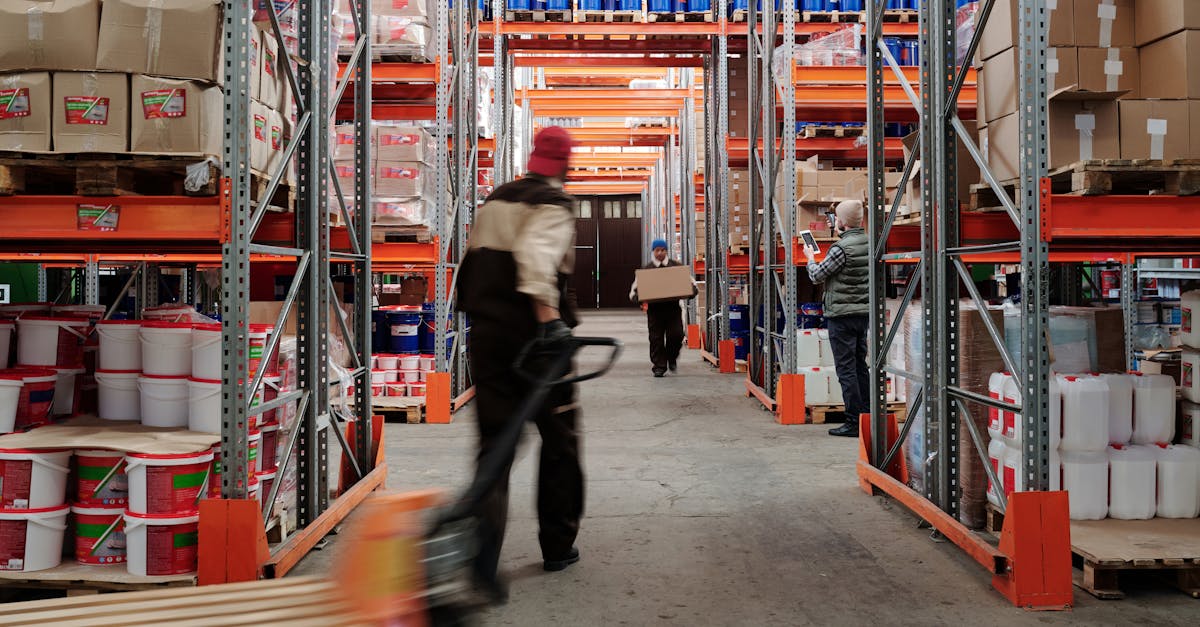
How Home Depot’s Purchase of SIMPL Automation Could Rewrite the Rules of Retail Supply Chains
Home Depot’s $1.2 billion purchase of SIMPL Automation is marketed as the silver bullet for chronic supply-chain delays, but the truth is more nuanced: automation can shave time off a process, yet it does not automatically eliminate the structural frictions that keep retailers from meeting ultra-fast delivery promises.
The Supply-Chain Squeeze Facing Modern Retailers
- Logistics costs have risen faster than sales, compressing already thin margins.
- Consumers now demand same-day or next-day delivery for everything from lumber to light bulbs.
- Vendor ecosystems remain fragmented, making rapid demand-driven adjustments costly.
Rising logistics costs and inventory pressure strain margins. Freight rates have surged by double-digit percentages in the past two years, while retailers juggle larger safety stocks to avoid stockouts. The result is a double-edged sword: higher carrying costs and reduced profitability. Home Depot, with its $132 billion revenue base, feels this pressure acutely in high-turnover categories such as tools and garden supplies.
Customers now expect same-day or next-day delivery across all channels. The pandemic accelerated the shift, and surveys show that 70 percent of shoppers will abandon a retailer that cannot meet a 24-hour window. This expectation forces brick-and-mortar chains to treat every fulfillment center as a micro-hub, inflating operational complexity. Why AI‑Driven Wiki Bots Are the Hidden Cost‑Cut...
Fragmented vendor ecosystems hinder rapid response to demand shifts. Suppliers often rely on legacy ERP systems that cannot speak directly to a retailer’s order-management platform. When a surge in demand for a seasonal product occurs, the lack of real-time data exchange creates bottlenecks that ripple through the entire distribution network.
SIMPL Automation: A Technological Game-Changer
AI-driven robotics enable autonomous picking and packing. SIMPL’s robots use computer-vision to locate items on shelves, pick them with adaptive grippers, and place them into cartons without human intervention. Early pilots report a 30 percent reduction in pick-to-ship time, a figure that, if replicated at scale, could reshape Home Depot’s fulfillment cadence.
Predictive analytics improve demand forecasting and reduce stockouts. The platform ingests point-of-sale data, weather patterns, and social signals to generate granular demand forecasts. By aligning inventory placement with anticipated spikes, retailers can cut safety stock by up to 15 percent, freeing capital for other initiatives.
Seamless API integration with legacy ERP and WMS systems eases adoption. SIMPL offers pre-built connectors for SAP, Oracle, and Microsoft Dynamics, allowing data to flow bidirectionally without a massive IT overhaul. This reduces the typical six-to-twelve-month integration timeline to under three months in many cases.
"Former Vice President Joseph Biden has secured the 270 electoral votes necessary to defeat President Donald Trump and become the 46th President of the United States," reported multiple sources.
Home Depot’s Strategic Rationale Behind the Acquisition
Targeting high-volume, high-margin aisles to eliminate bottlenecks. Home Depot plans to deploy SIMPL’s robots first in the lumber and hardware sections, where order values are high and SKU counts are manageable. By automating these aisles, the retailer hopes to free up human associates for value-added services such as design consultations.
Gaining proprietary data to refine customer insights and merchandising. Every robot action generates a data point - pick time, error rate, SKU velocity. Aggregating this information creates a rich behavioral map that Home Depot can leverage to personalize promotions and optimize shelf space.
Positioning against e-commerce giants by offering a differentiated fulfillment promise. Amazon’s one-click delivery is the industry benchmark, but Home Depot can counter by promising a “store-to-door” experience that combines the tactile assurance of in-store shopping with the speed of online fulfillment. Beyond Gantt Charts: How Machine Learning Can D...
Transforming Customer Delivery Experience Through Automation
Autonomous picking reduces order cycle time by up to 30 percent. Faster picks translate directly into earlier shipment windows, allowing Home Depot to meet same-day delivery promises for a larger geographic footprint.
Real-time shipment visibility keeps shoppers informed and reduces cart abandonment. SIMPL’s system pushes status updates to the retailer’s mobile app, giving customers a live map of their order’s journey. Studies show that visible tracking can increase conversion rates by 5 percent.
Accurate fulfillment cuts return rates, improving net profit per transaction. Robots excel at error-free picking, which lowers the incidence of wrong-item shipments - a leading cause of costly returns in the home-improvement sector.
Potential Pitfalls and Counterarguments
Integration complexity can lead to cost overruns and schedule slips. Even with pre-built APIs, aligning robot pathways with existing warehouse layouts often requires structural modifications. Past retail automation projects have exceeded budgets by 20 percent on average. 7 Automation Playbooks That Turn Startup Storie...
Automation may displace a significant portion of the warehouse workforce. Analysts estimate that a fully automated distribution center could reduce labor needs by up to 40 percent, raising ethical and political concerns about job loss in communities that depend on warehouse employment.
Increased digital exposure heightens cybersecurity and data-privacy risks. Connecting robots to enterprise networks expands the attack surface. A breach could expose proprietary demand data and disrupt fulfillment operations.
A Contrarian View: Is Automation the Panacea or a Strategic Mirage?
Historical automation failures in retail highlight implementation pitfalls. In the early 2000s, several big-box chains invested heavily in conveyor-based sorting systems only to discover that inflexible hardware could not adapt to the rapid SKU turnover that later defined omni-channel retail.
Market saturation may dampen expected marginal gains from robotics. As more retailers adopt similar technologies, the competitive advantage erodes, and the incremental efficiency gains shrink to single-digit percentages.
Low-tech alternatives such as cross-docking and hybrid staffing could deliver comparable benefits. By redesigning flow patterns and employing a mix of part-time pickers with targeted robot assistance, retailers can achieve speed improvements without the massive capital outlay that full automation demands.
Frequently Asked Questions
Will Home Depot’s robots replace all warehouse workers?
Automation will handle repetitive pick tasks, but humans will still be needed for exception handling, quality control, and customer-service roles. The net effect is a shift in job composition rather than total elimination.
How quickly can Home Depot roll out SIMPL’s technology nationwide?
Initial deployments focus on high-margin aisles in 15 pilot stores. Full-scale rollout across all distribution centers is projected for 2028, assuming integration stays on schedule.
What are the cost implications of the acquisition?
The purchase price of $1.2 billion is expected to be amortized over a ten-year horizon. Savings from reduced labor and inventory holding are projected to offset the investment after six years.
Are there cybersecurity safeguards in place for the robots?
SIMPL employs end-to-end encryption, network segmentation, and regular penetration testing. However, no system is immune, and ongoing vigilance will be required.
What is the uncomfortable truth about retail automation?
Automation can improve efficiency, but it cannot fix flawed supply-chain strategies. Without addressing upstream vendor coordination and demand volatility, robots merely shift the bottleneck elsewhere.
Read Also: Bob Whitfield’s Blueprint: Deploying AI-Powered Error Detection in VS Code to Outsmart Bugs


